
From the very first glance, a crystal pendant necklace catches the light and draws attention—yet the underlying value goes far beyond sparkle. In a world increasingly aware of resource waste, jewellery that embraces re‑use, thoughtful selection of materials, and one‑of‑a‑kind design sends a powerful message. For brands like OHGG, which specialise in handmade pieces—necklaces, earrings and rings crafted from natural freshwater pearls, genuine gemstones and lacquer beads—the convergence of environmental consciousness and individual style creates genuine appeal. The following pieces explore how the unique nature of each product plays out across multiple dimensions—transparency of materials, re‑use and minimal waste, limited‑edition production, and personal meaning—and illustrate how a jewellery brand can genuinely embody these values in an actionable way.
Table of contents:
Why unique matters when the story of a gemstone necklace begins at its source
How the “made-by-hand” promise supports durability and mindful purchase behaviour
How uniqueness works as both aesthetic and environmental signal
When a brand emphasises that each piece is one‑of‑a‑kind, part of the story lies in where and how its components are sourced. In the case of the OHGG Handcrafted Freshwater Pearl with Lacquer Bead Necklace (and its siblings) the materials include natural freshwater pearls, handmade lacquer beads, and natural crystals. According to the site, “Each pearl is meticulously handpicked ensuring quality and uniqueness.”
This kind of statement matters because it frames the jewellery as more than a mass‑produced commodity: the sourcing is visible, the originality is assured, and the brand conveys respect for the material’s story. For environmentally‑aware buyers, this means less risk of over‑production, less risk of anonymous supply chains, and a stronger connection between wearer and material.
Moreover, when a piece of jewellery emphasises uniqueness, for example “chain necklaces” with varying lengths or customised arrangements, customers feel they own something that isn’t simply one of many identical items. That uniqueness can reduce the desire to discard or replace goods rapidly—since the value is tied to the story and the hand‑craft behind it. In turn, it supports a reduced‑waste mindset.
What you can emphasise for your brand: each gemstone necklace or chain necklaces collection is designed from natural and hand‑worked components, limiting the number of identical pieces, avoiding excess stock, and thus making each wearer part of the story of responsible consumption.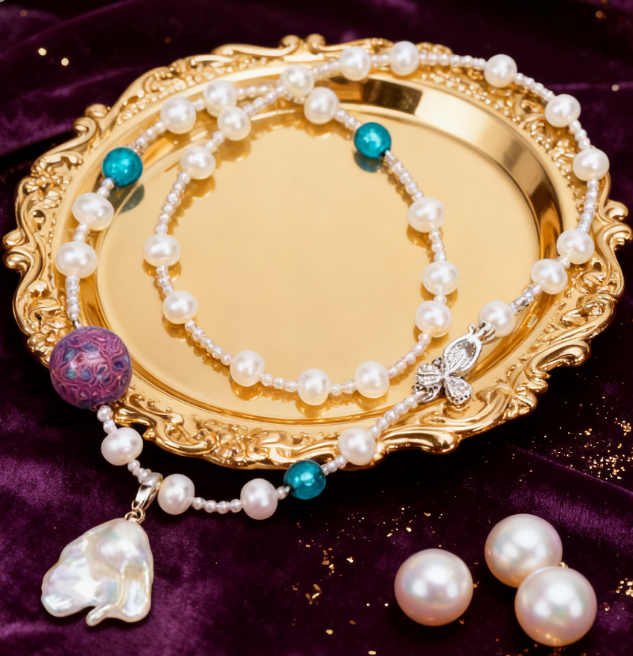
Unique pieces require unique processes. When you craft handmade jewellery—mixing natural freshwater pearls with lacquer beads and crystals—you signal to customers that this isn’t factory output at scale, but artisan work with attention to detail. For example, OHGG states that their lacquer beads are handmade and the production period may take several months.
From an environmental angle, this has multiple upsides:
Fewer identical pieces mean less mass production and less risk of unused inventory.
Craft-processes often produce less waste compared to high-volume automated manufacturing (because you tailor to orders or limited runs).
A piece that is handcrafted tends to command more care from the owner, reducing the rate at which it might be discarded or replaced.
The uniqueness reinforces emotional value: when a customer knows this piece is “mine, made with human hands, not literally just one of thousands”, they tend to cherish it rather than treat it as fleeting fashion.
For your brand OHGG, you can highlight how each necklace, each earring, each ring is individually hand‑assembled, how your artisan team selects the pearl or gemstone, how you avoid large runs of identical items. This encourages purchase decisions rooted in quality, individuality and longevity rather than fast‑fashion consumption.
When a piece is truly “one-of-a-kind”, it signals scarcity, individuality—and thus encourages longer retention. Consider the following axes along which uniqueness can be communicated and leveraged in marketing:
Material variation: Natural freshwater pearls vary in size, shape and lustre. Lacquer beads likewise bear hand‑finish variation. Highlighting that no two pearls or beads are absolutely identical enhances perceived uniqueness. OHGG’s description notes natural pearls are organic gems and slight surface imperfections are normal.
Limited quantity: If you produce a set number of each design, you can emphasise “limited run” which reinforces the value.
Customisation or bespoke elements: Offering optional length adjustments, bead colour variations, or small accent changes reinforces that each piece is not from a faceless production line.
Story-telling of the maker: Sharing the craft process—how the lace beads are prepared, how the pearls are selected, how crystals are set—adds value beyond mere commodity jewellery.
From an environmental communications perspective, these factors help shift the narrative: this is jewellery to treasure, not to toss. That helps the brand educate and show alignment with resource‑thoughtfulness without using vague terms like “eco‑friendly” (which you requested to avoid). Instead you can talk about “minimised excess production”, “natural material variation”, “hand‑selected components”, and “reduced inventory waste”.For your brand OHGG you can highlight how each difference in bead, each pearl’s unique luster, each handmade lacquer bead thread‑work, all contribute to a piece that is singular—and thus worth keeping.
1: Why should I choose a handmade piece rather than a mass‑produced one?
Handmade jewellery often uses smaller production runs, more attention to material variation and finish, and therefore less likelihood of wasteful inventory. It also tends to have higher emotional value for the wearer, encouraging longer use rather than quick replacement.
2: What makes each piece unique in a gemstone necklace or chain necklaces collection?
When materials like natural freshwater pearls, lacquer beads, and genuine crystals are used, each batch inherently varies in size, finish, luster and colour‑tone. Hand‑assembly ensures that no two pieces are exactly the same—so the wearer knows theirs is distinct.
3: How does using natural pearls and crystals support more mindful consumption?
Natural pearls and crystals require less artificial processing than some fashion materials, and their uniqueness discourages rapid turnover and disposal. When a piece becomes more than just an accessory—when it has material story and craft story—it tends to be kept longer.
4: Can a piece of jewellery designed for everyday wear still be responsibly made?
Absolutely. Designing versatile pieces (such as chain necklaces or pendant necklaces) that fit seamlessly into daily life encourages fewer purchases overall and more use per item, which reduces overall material and consumption footprint.
5: How does your brand ensure that the practice of uniqueness doesn’t simply become “luxury for luxury’s sake”?
By emphasising transparency in material sourcing (freshwater pearls, handmade lacquer beads, natural crystals), limiting identical run counts, designing for wearability, and encouraging care and longevity of each item. That way, uniqueness isn’t exclusivity for its own sake-but value built to last.
When a jewellery brand commits to handcrafted, naturally varied materials and limited‑run pieces, it opens a path to environmental responsibility through design, material choice and lifecycle thinking. For OHGG, the choice to combine natural freshwater pearls, genuine crystals and handmade lacquer beads means that each piece—whether a crystal pendant necklace, a refined string of chain necklaces, or a layered gemstone necklace style—is more than an accessory: it becomes a meaningful object, worth keeping, wearing and sharing. This sense of uniqueness aligns with a mindset of less frequent replacement, less excess stock, and greater emotional connection—ultimately contributing to a more sustainable approach in the jewellery world. If you’re seeking jewellery that honours both individual style and thoughtful material use, OHGG stands out for its artisan craft, authentic materials and commitment to difference.


